
There is but one straight course, and that is to seek truth and pursue it steadily.” —George Washington (1795)

In the affirmative:
Though the founding principles of the United States were drawn from another era, these principles remain essential to comprehend in the contemporary world. This is especially true for the Republic of the United States of America. Yet, these principles need to be understood globally. This republic is predicated on the fundamental notion that certain rights are provided to all of humanity from the providence of God. These are not government-provided privileges that are quickly taken away by the government. These rights are unalienable. This means that the government, by the matter of natural rights, should never seek to strip away these fundamental rights, as it is not the government’s prerogative.
This very issue was brought to bear in drafting the Declaration of Independence. After decades of an unspoken agreement that the British government would leave British America essentially to its own governance, the British government began systematically levying excessive taxation on the colonists. Further, there were other demands, such as the quartering of British troops in American homes. Many Americans believed these impositions to be intolerable. This was especially true because these conditions were imposed on the Americans without any representative voice given in return (Galiani & Torrens, 2018).
This led to a growing resistance movement. Today, the taxes paid by the middle class in the United States of America are higher than they were at the point of the American Revolution. In today’s America, the elite again seeks to disenfranchise the voices of nearly half the nation to impose the urbane voice of metropolitan America over the more rural America that the elitists feel is somehow backward from the agenda of so-called progressives. The interesting thing about the progressive agenda is it is regressive in seeking to consolidate power into the hands of a technocratic elite and out of the hands of The People. This must never be allowed to happen again. Our founders fought hard against the idea of any sort of aristocracy taking power in the republic.
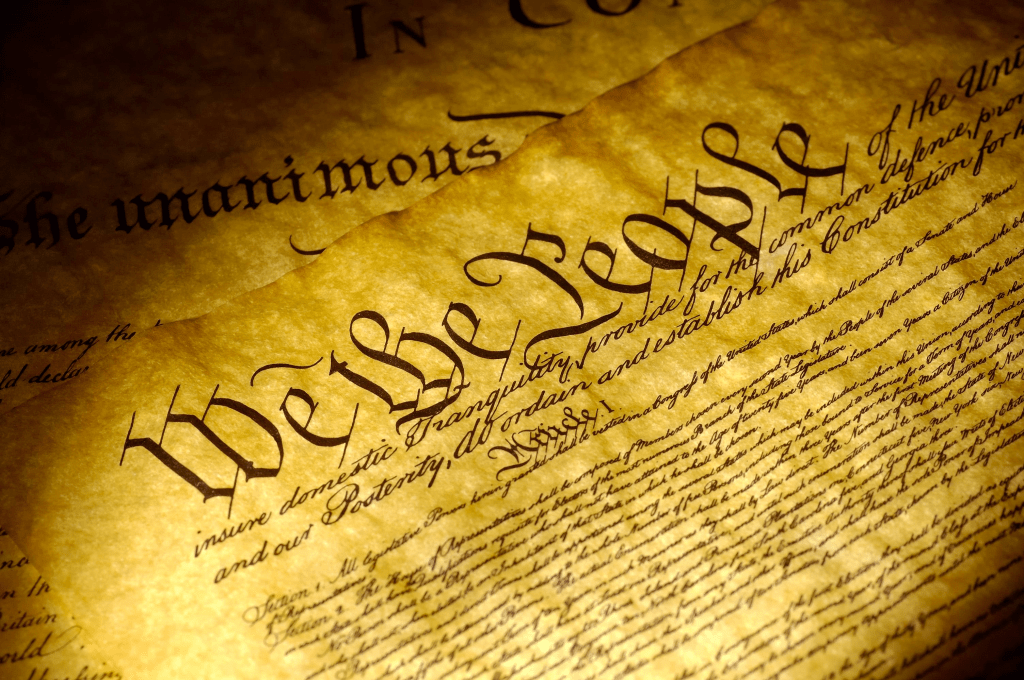
One of the first references to why this notion of the natural equality of mankind in the nation’s history is The Declaration of Independence. This foundational document seeks to preserve the ideal that all mankind was created equal in the ability to pursue their best outcomes in life, regardless of color, creed, natural gender, or any other qualification. While it does not bestow a guaranteed equal outcome, it does set out that all of humanity has the equality of opportunity starting at God’s foot and having no other king or unequal superiors in life without merit. This is bestowed on us all by God above and not to be hindered by anyone below. None of humanity is born to be enslaved by others.
The authority given to others is not based on any inheritance or inherent right of one or some over the rest of humanity. Given the agreement made under the philosophical ideal of social compact and representative government, it is a necessary evil. This is necessary rather than living in anarchy because mankind does not consist of a society of angels. Humanity is not necessarily all that humane. History has shown this time and again. To circumnavigate the brutish world written about by Thomas Hobbes and yet not succumb to the absolute sovereign, Hobbes believed it necessary (Hobbes, 1651). The People have come to understand the need to submit to acceptable authority and leadership for the purposes of order and the preservation of safety.
This government’s three primary purposes were national security, criminal justice, and civil law. The goals sought were to guard against that Hobbesian brutish world. It was to do so by acting to preserve a right to live without fear of death and violence. Such a government would also act to protect property rights. All of this is necessary to preserve all societies. This, too, must be balanced with the rights of all others in any given society. The right to protect the rights of one must be subjugated to the rights of all others to have their rights protected too. In the midst of this balancing, it is also necessary to provide a safety net of last resort for those who genuinely need assistance to prevent starvation and destitution.
As Madison has pointed out, though, we must avoid going too far into the areas of the general welfare. This exceeds the bounds of the Constitution. This constitutional excess reaches into other areas of contemporary government too. For example, administrative agencies are a problematic overreach that blends areas of government that are intended to be separated into a system of checks and balances. Further, the delegated roles of the executive, judicial, and legislative branches have become blurred at best. This must be rectified. This came about because the nation has not adequately disseminated the founding principles of this nation.
In seeking justice for some in our nation’s laws, we have often provided less justice for all. We should heed Aesop and stop grasping at shadows lest we lose the substance of what this nation is meant to be as the exemplary city on the hill, as a shining example of the fruits of rational freedom and liberty.
(c) April 8, 2025 Michael Doyle All Rights Reserved


 ALOHA PROMISES FOREVER